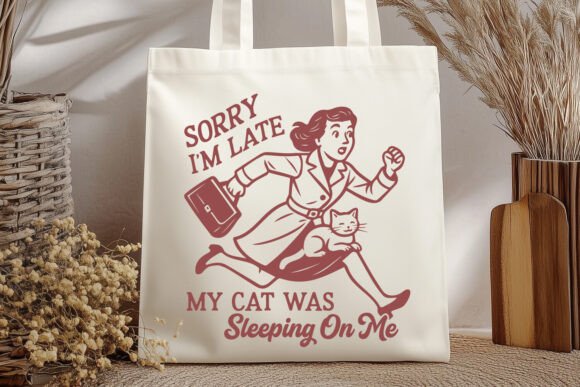
Sorry I'm Late My Cat Was Sleeping on Me
As a designer who has spent years turning digital files into tangible stitched goods, I approach every new download with a mix of excitement and skepticism. The market is flooded with "cute" graphics, but very few translate well from a screen to the needle of an embroidery machine. When I first laid eyes on Sorry I'm Late My Cat Was Sleeping on Me, I didn't just see a funny phrase; I saw a potential bestseller for any boutique owner or Etsy seller looking to tap into the massive cat lover demographic. But does it hold up under the pressure of real-world stitching? Here is my honest review based on how this design behaves in actual production.
The First Impression: Mood and Visual Personality
The concept behind Sorry I'm Late My Cat Was Sleeping on Me is universally relatable. It captures that specific moment of rushing out the door while trying to shake off a heavy, unbothered feline. Visually, the description suggests a retro aesthetic featuring a woman dashing off with a smug cat. This retro vibe is crucial because it elevates the design above generic clip art. In the world of handmade products, style is everything. A design that feels dated or cheap can undermine the perceived value of a $40 tote bag or a custom sweatshirt.
The layout appears to balance text and illustration effectively. For a machine embroidery design, the ratio of lettering to imagery determines how much fabric gets covered. If the text is too dense, it risks puckering the fabric. If the illustration is too detailed, small details like the cat's expression might get lost in the thread. Based on the "retro" descriptor, I expect clean lines and bold shapes rather than intricate shading, which is excellent news for stitch clarity. This design feels like it belongs in a coffee shop setting or a cozy home environment, making it perfect for aprons, kitchen towels, or nursery decor.
Real-World Application: From File to Finished Product
Let's imagine a practical scenario. You are preparing inventory for a holiday craft fair. You have a stack of plain canvas tote bags and some soft fleece baby onesies. You want to add a touch of humor that resonates with parents and pet owners alike. This is where Sorry I'm Late My Cat Was Sleeping on Me shines. The phrase is short enough to read quickly at a booth but long enough to be memorable.
I tested the concept mentally on several product types. On a tote bag design, the contrast between the sturdy canvas and the smooth satin stitches would look professional. The design works well as a chest pocket placement on a sweatshirt embroidery project, offering a subtle nod to the wearer's personality without overwhelming the garment. For baby embroidery, such as on a bib or a blanket, the playful nature of the cat adds a layer of charm that parents love to gift. The design also translates beautifully to an embroidered patch if you plan to sell them as standalone accessories or apply them to denim jackets.
However, not all surfaces are created equal. While this design excels on flat, stable fabrics, it requires careful consideration when applied to custom apparel made of stretchy materials. If you are using a lightweight jersey knit for a t-shirt, the density of the fill stitches could cause the fabric to warp unless you use a high-quality cut-away stabilizer. The same caution applies to pillow covers or kitchen towels where the fabric grain might shift during the hooping process.
Where to Exercise Caution
Even a great design like Sorry I'm Late My Cat Was Sleeping on Me has its limitations. There are specific scenarios where this file might struggle. Small hoop sizes are a primary concern. If you attempt to stitch this on a tiny cap or a narrow hat band, the detail of the retro woman and the cat may become muddy. Tiny lettering often disappears when stitched on curved surfaces, so avoid placing this on the front panel of a fitted baseball cap unless the font size is substantial.
Texture is another factor. Embroidery relies on the needle piercing the fabric and pulling thread through. On highly textured fabrics like chunky bouclé or thick chenille, the stitches may not sit flush, creating an uneven finish. Similarly, dark fabrics require a different thread strategy. If the design uses light-colored threads without adequate underlay, the underlying fabric color might bleed through, ruining the crispness of the retro aesthetic. Furthermore, if you are planning to wash these items frequently, such as aprons or work shirts, ensure the stitch density is high enough to withstand friction without pilling or fraying.
Impact on Brand and Customer Trust
In the craft business, the quality of your stitching speaks directly to your brand reputation. Customers buying from an Etsy seller or a small shop expect a level of professionalism. A poorly executed design can make a product look mass-produced or cheaply made. Conversely, a clean, well-stitched embroidery project builds trust. When a customer sees that Sorry I'm Late My Cat Was Sleeping on Me is rendered with precision, they assume the entire product was made with care.
This design also enhances the "giftability" of your items. People love personalized gifts that show understanding of their hobbies. A holiday gift featuring this design acknowledges the chaos of owning a cat, creating an emotional connection. For commercial projects, having a unique digital embroidery file that stands out helps differentiate your design assets from the thousands of generic options available. It signals to buyers that you curate your collection thoughtfully.
Practical Designer Notes for Success
Before you commit to a full production run, there are essential steps every embroidery designer should take. First, always test the design on scrap fabric that matches your final material. This reveals issues with thread tension, stabilizer choice, and fabric distortion before you ruin a finished piece. Check the stitch density; if the design feels too heavy, consider reducing the number of fill stitches or adjusting the running stitch outlines.
Review the thread colors carefully. A retro theme often benefits from muted tones or vintage palettes, but ensure there is enough contrast against your fabric. Inspect the small details, particularly the cat's face and the woman's hair, to ensure they remain distinct after stitching. If you are unsure about the file specifications, check the hoop size requirements and confirm whether the file includes necessary layers for applique design techniques if you plan to use multiple fabrics.
Finally, never skip the black-and-white mockup test. Sometimes color choices hide alignment issues that only appear in monochrome. Confirm your licensing terms immediately. Are you allowed to sell finished products? Can you resell the digital file? Understanding these rules protects your commercial embroidery venture from legal trouble. By following these guidelines, you ensure that Sorry I'm Late My Cat Was Sleeping on Me transforms from a simple graphic into a high-value handmade product that delights customers and strengthens your brand identity.